Store credit and gift cards can both give a customer spending power, but they solve different problems. Start with the recipient and the reason for issuing value. A goodwill balance for an existing customer and a birthday present bought for someone else should not share an improvised support workflow.
This guide helps you choose the route before changing a balance. Public documentation was reviewed October 17, 2026. The examples are fictional; no customer balances were changed.
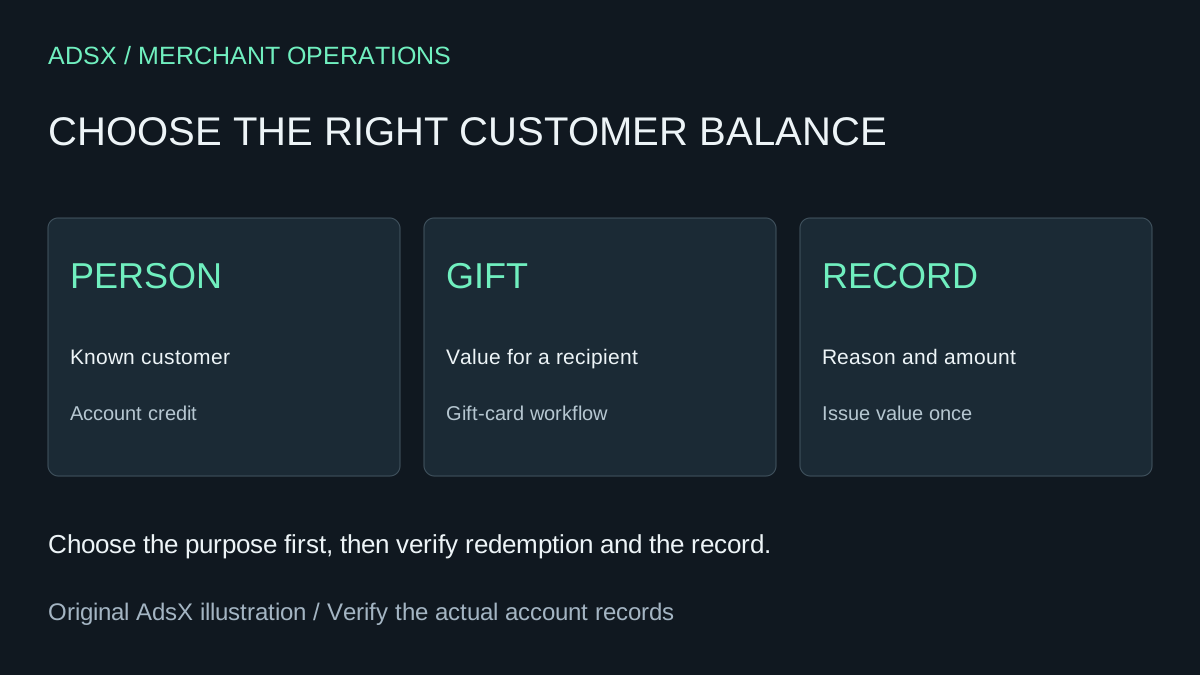
Original AdsX explanatory illustration.
Choose the customer experience first
Shopify's store credit documentation describes a balance on a customer profile. Redemption uses customer accounts or Shop Pay; legacy customer accounts do not support it. Credit in another currency does not appear as an eligible balance for a differently denominated checkout.
Shopify's gift-card overview describes gift cards that you can sell as products or create in the admin without charging the recipient. That makes gifting a distinct use case rather than merely a different name for an account adjustment.
Use this decision table as an operating proposal, then confirm the customer can use the chosen route:
| Situation | Starting point | Confirm before issuing |
|---|---|---|
| Existing customer receives a goodwill allowance | Customer-account credit | Correct profile, currency, and redemption access |
| Shopper buys a present for somebody else | Gift-card product | Recipient delivery and the purchased denomination |
| Staff offers a complimentary gift card | Admin-issued gift card | Approval, amount, and reason |
| Customer returns merchandise | Original order and agreed refund policy | Appropriate refund method; do not assume either option |
The table is a decision aid, not permission to substitute credit for a refund a customer is entitled to receive. Resolve the return separately. Our gift-card refund guide follows the original transaction and payment destination.
Work through one customer record
Imagine a fictional stationery store approves a $15 goodwill allowance after a delayed delivery. The customer already has $8 of unused account credit in the same currency. If the team chooses account credit, the intended balance becomes $23 before any further purchases or adjustments.
The support record should say “added $15; resulting balance $23,” not “gave the customer $23.” That distinction prevents the next shift from interpreting the balance as the compensation amount.
Now imagine a different shopper buys a $50 birthday gift. The purpose is a gift-card purchase, not compensation for the buyer. Creating a $50 credit on that buyer's profile would answer a different request. Use the gift-card setup checklist to plan the product and delivery experience.
For either case, record the underlying event, approved value, destination, and completion evidence. Do not use a customer's message saying “I cannot see it” as proof that nothing was issued. Inspect the record before making another adjustment.
Check practical limits before promising credit
The store credit guide says recurring subscription bills cannot use store credit, although an initial subscription purchase can. It also distinguishes applying credit in the admin from a customer using a checkout link. Do not promise that every manual order or renewal will consume a balance automatically.
For stores created on or after May 12, 2025, Shopify documents third-party transaction fees on the portion paid using store credit. Review the applicable plan and billing terms before treating credit as cost-free. Expiration is selected per issuance rather than through a store-wide default.
Keep the promise narrow and understandable: the amount, currency, intended use, and any applicable expiry. A support agent should not need to explain your entire payments setup to tell a customer what was granted.
Give staff a small approval checklist
Before issuing value, a teammate should be able to answer four questions:
- What happened, and which customer or order does it concern?
- What amount was approved, by whom, and for what purpose?
- Which instrument matches that purpose and the customer's access?
- What record will demonstrate that the action happened once?
After issuance, have the teammate compare the recorded result with the approved amount. If there is a mismatch, pause the handoff and investigate it. Do not silently create a second balance to make the visible total look right.
Measure the outcome without counting the same value twice
Keep granted value, redeemed value, and new paid purchases separate in your review. A $15 allowance followed by a $40 basket does not automatically establish $40 of incremental revenue caused by the allowance. Some customers would have returned anyway, and part of that basket may be funded by credit.
For a small team, start with an exception review: which customers could not redeem the intended value, which records needed correction, and which support explanations were unclear? Improve those steps before expanding the policy. The useful choice is the one your customers understand and your team can reconcile.