A useful Whop membership trial gives someone enough experience to decide whether the ongoing subscription is worth paying for. Start with that decision, then choose the trial length and explain the paid transition clearly. More trial starts alone do not establish a better offer.
Disclosure: Dennis Hegstad works at Whop and owns AdsX. AdsX may earn a commission from qualifying businesses referred through our signup links. This article uses public documentation reviewed October 15, 2026. The examples are hypothetical, and we have not run the trial described here. See our editorial policy.
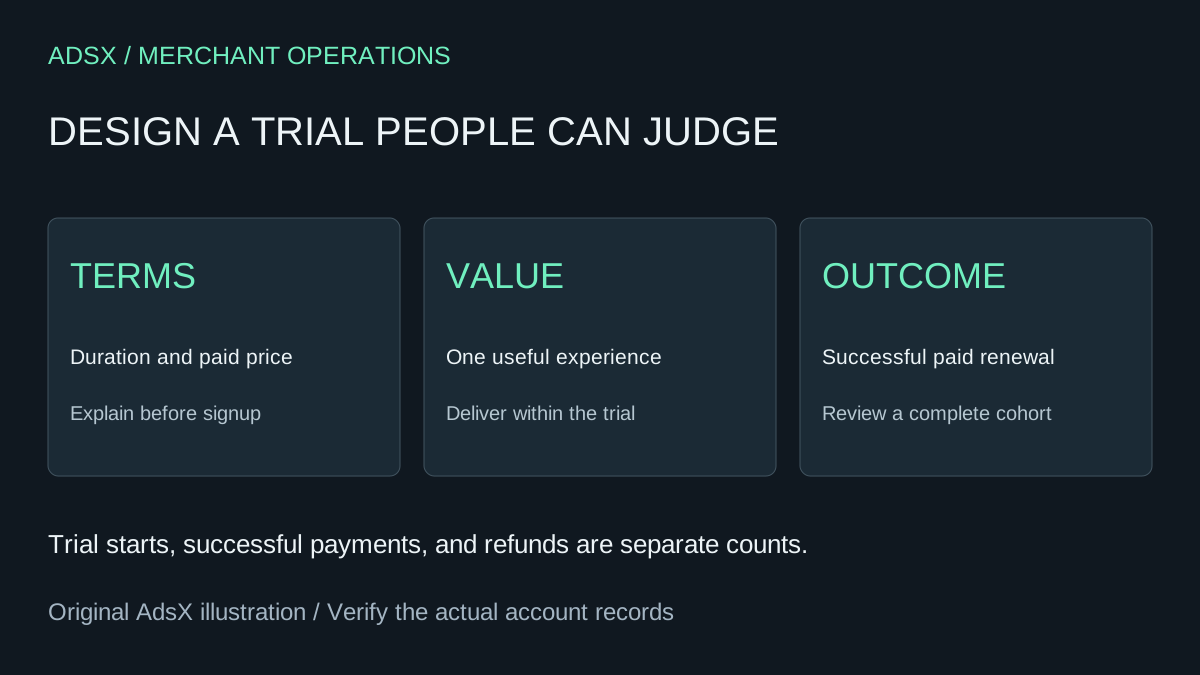
Original AdsX explanatory illustration.
Set up the right kind of checkout link
Whop’s free-trial documentation says trials are available on recurring checkout links, not one-time payment links. In Dashboard > Checkout links, create or edit a link, enable Free trial, choose the number of days, and save the change. The documentation states that standard billing begins automatically when the trial ends.
A free-access product is a different offer. Whop’s checkout-link guide distinguishes free, one-time, and recurring pricing. Choose recurring pricing with a trial when the intended offer is a subscription that begins charging after the introductory period. Do not describe a permanently free product as though it will automatically become a paid membership.
Before sharing a link, inspect its customer-facing price, interval, trial terms, and included access. Check the actual saved configuration rather than relying on the name you gave the link.
Choose a trial around the buying question
Imagine a fictional product-photography membership priced at $29 per month. Members receive a weekly critique session and a library of lighting exercises. The prospect’s question is whether the feedback will help them improve photographs for their own store.
A trial that only exposes a welcome page cannot answer that question. A trial that includes a useful exercise and a realistic opportunity to receive feedback can. The proposed $29 price is an example, not a Whop fee or recommended market price.
For this membership, the operator should look at the actual critique schedule before selecting a duration. If someone joins immediately after a weekly session, will they have a fair chance to experience the core service before billing? A seven-day label is not sufficient evidence. Count the time available to the member and the response time the operator can reliably support.
| Offer characteristic | Trial-design question |
|---|---|
| Scheduled live activity | Can a new member attend before the trial ends? |
| Self-paced exercises | Can the member complete one meaningful exercise promptly? |
| Individual feedback | Does the operator have capacity to deliver what is promised? |
| Large downloadable library | Is a trial appropriate for material that can be consumed immediately? |
Sometimes a clear sample lesson or a one-time introductory product is a better fit than a subscription trial. Choose the format around the experience you can deliver.
Write the paid transition in plain language
Place the trial duration, subsequent price, billing interval, included service, and cancellation route where a buyer can understand them before joining. Check that the description agrees with checkout. An attractive headline should not require a support conversation to discover the recurring price.
For the fictional membership, a draft could say: “Try the lighting exercises and this week’s critique session for seven days. After the trial, the membership is $29 per month unless you cancel before billing. Review the billing date and subscription controls in your account.” Use this only after confirming that the actual configuration and access support every part of it.
Avoid promising that cancellation deletes a charge already made or automatically refunds it. Our refund and cancellation guide explains why billing, refunds, and access need separate attention. Make the support route easy to find without sending members into a public discussion with private payment details.
Give the trial a small, useful outcome
For the photography example, ask a member to choose one product, take a baseline photo, apply one lighting exercise, and bring a specific question to critique. That produces something the member can judge. A tour of every folder does not.
Keep the first task small enough for the trial period. If most people cannot finish it, extending the trial may only delay the same problem. Review the instructions and the work required before changing the duration. Our member-onboarding guide covers the broader first-week path; here the priority is whether the trial supports an informed paid decision.
Evaluate a complete trial cohort
Consider 50 illustrative trial starts in one week. After all 50 trials have reached their scheduled end, 18 have a successful first subscription payment. That is a 36% first-payment rate for this cohort: 18 divided by 50. It is not a forecast, a Whop benchmark, or evidence of long-term retention.
Suppose two of those payments are later refunded. Keep the original first-payment count and the refund count separately, then examine subsequent successful payments as the cohort matures. Do not silently redefine conversion to make the result look better. Failed payment attempts, voluntary cancellations, refunds, and successful renewals identify different problems.
Record the offer, trial duration, acquisition source, and observation dates alongside the counts. Compare completed cohorts under similar conditions. If you change the price, trial length, and traffic source together, the result will be difficult to interpret. These are suggested analysis fields, not a claim that Whop supplies a ready-made report with this exact layout.
Launch with one offer you can support
Start with one clearly described membership and a manageable trial experience. Verify access from an ordinary customer perspective, inspect the billing terms, and assign someone to handle questions. Keep the offer stable long enough to see completed trial outcomes.
If this model fits your business, create a Whop business through AdsX’s referral link, then configure the offer in your own account. Merchant subscription payments and AdsX’s partner commissions are separate outcomes; neither a link click nor a trial start proves a qualifying partner commission.