Disclosure: AdsX may earn a commission from qualifying Shopify referrals through signup links. Examples and worksheets are original editorial planning aids, not observed merchant results. Sources checked November 28, 2026.
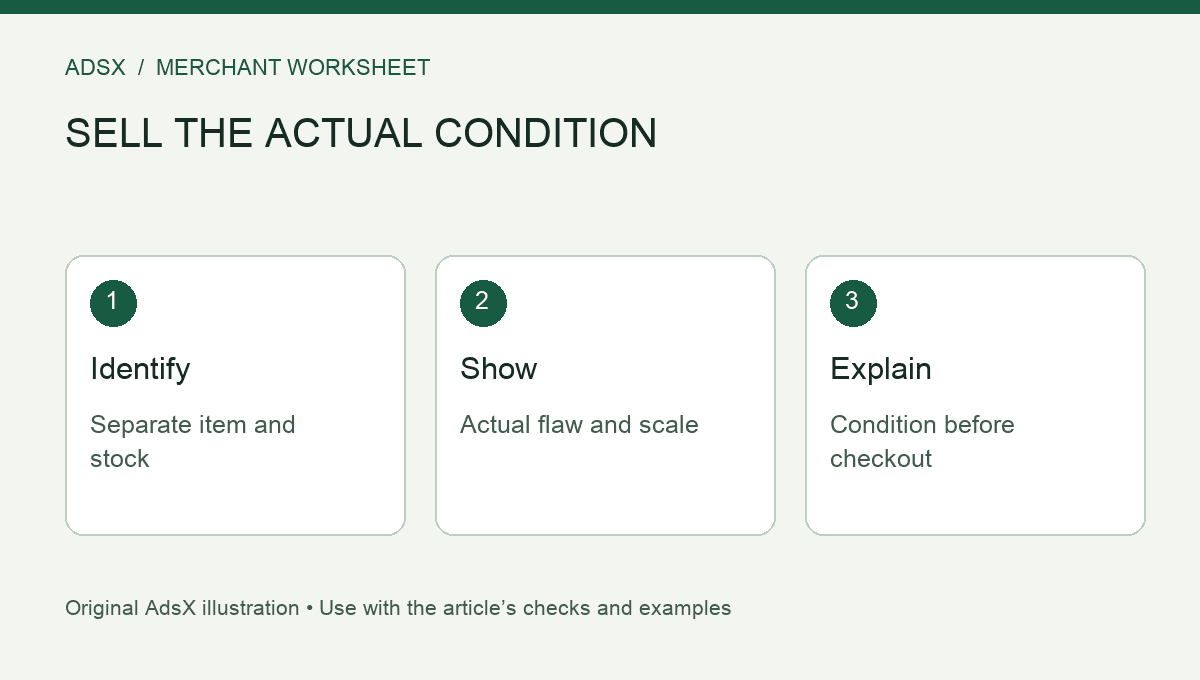
Original AdsX explanatory illustration.
A sample or cosmetic second should not look like a discounted standard item unless it truly has the same condition and contents. Before listing it on Shopify, decide whether the customer needs to choose a particular unit, see an actual defect, or understand a different package of included items.
This is especially useful for makers adding an online outlet for leftover event stock. It is not permission to sell unsafe goods or remove rights that apply to the transaction.
Decide whether the unit needs its own listing
For a hypothetical ceramic bowl with a small glaze blemish, an individual listing can show the exact piece. If several units share a consistent, clearly described cosmetic variation, a grouped approach may be workable, but the description must not imply the photographed defect is the only possible condition unless that is true.
| Stock type | Information the customer needs |
|---|---|
| One-off sample | Actual item, dimensions, use history, included pieces |
| Cosmetic second | Nature and location of the imperfection |
| Incomplete package | Precisely what is missing |
| Standard sale item | Normal specification and the genuine selling price |
Do not use a vague “minor imperfections may occur” line to conceal a known material defect. Keep unsupported safety or durability claims out of the listing.
Give the stock a separate operational identity
Use a distinct internal SKU when condition changes which unit must be picked. Keep the actual quantity separate from standard stock. Shopify's SKU guidance supports unique variant identification; the inventory quantity guide explains how to maintain the stock record.
For one unique bowl, the sellable quantity should reflect that one physical unit. Confirm inventory tracking and the store's out-of-stock selling behavior. Copying an existing product's text is not evidence that its inventory settings are appropriate for a unique sample.
Photograph the difference, not just the attractive angle
Take a full view and a close view of the flaw with a useful scale reference. Show the actual included pieces. Follow the product photography brief, but do not use generated imagery to erase the very condition the customer needs to evaluate.
Place the condition explanation where buyers will encounter it before adding the item to the cart. Check collection cards, variant choices, and order details so staff can distinguish the second from the standard item. A hidden paragraph at the end of a long description is a weak operating safeguard.
Price the handling work as well as the discount
Suppose a standard item sells for $40 and a second is priced at $25. If the second takes an extra 15 minutes to photograph and list, that time matters. At an illustrative $20 hourly labor value, the added listing work costs $5 before packaging, payment costs, delivery, and support. A lower price does not automatically make the item worthwhile to sell online.
State the applicable return conditions accurately and verify legal requirements for the actual market. Do not assume that labeling an item “final sale” overrides them.
For the larger launch, use Start a Shopify Store. For stock shared with fairs, use the craft-fair transition guide. The goal is a listing and picking process that deliver exactly the condition the buyer knowingly chose.