A web designer selling a site build and a care plan is selling two different services. The build has deliverables and an end point; the care plan creates continuing obligations. Whop’s payment and client-space tools can support either, provided the customer understands where one ends and the other begins.
Disclosure: AdsX owner Dennis Hegstad works at Whop. AdsX may earn a commission from qualifying businesses referred through our signup links. Public sources were reviewed October 4, 2026. Package prices and scenarios below are illustrative, not platform quotes or customer results. Editorial policy.
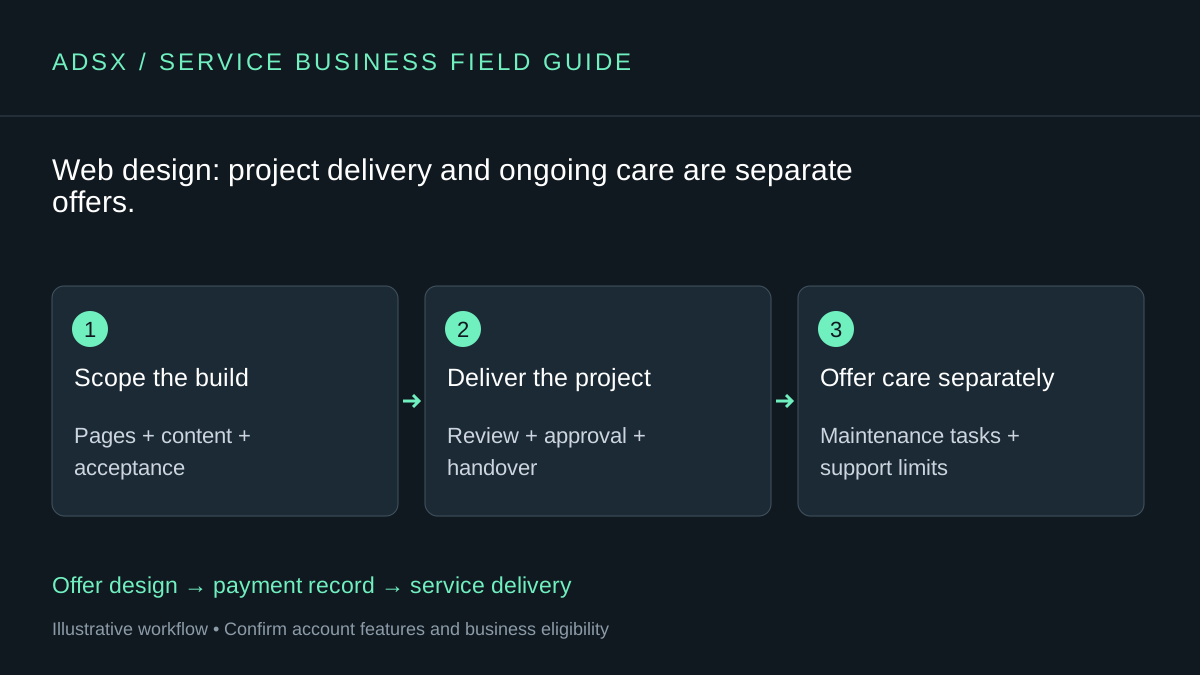
Original AdsX workflow illustration.
Define a website by more than page count
Five pages can mean a straightforward brochure site or a complex collection of forms, integrations, and custom layouts. List the included functionality, content responsibilities, revision rounds, and acceptance process. State who supplies copy and imagery, and when those inputs are due.
Do not promise an exact launch date that depends on missing customer materials or third-party approvals. Make dependencies visible in the proposal and client workspace.
| Build component | Scope decision |
|---|---|
| Pages and templates | Named pages and reusable layouts |
| Functionality | Forms, integrations, and commerce requirements |
| Content | Who writes, supplies, and approves it |
| Review | Number and format of revision rounds |
| Handover | Access, documentation, and support period |
Bill the project according to its agreement
A $2,400 illustrative project split into two $1,200 payments is a finite engagement. An automatic monthly renewal would be the wrong default unless a separate ongoing service has been purchased.
Whop’s checkout-link documentation explains one-time, recurring, and installment options. Choose the one that reflects the accepted proposal. If payment depends on approval, do not assume an automatic installment can recognize that event.
The agency-services guide also describes a private client workspace. Our portal guide helps keep the brief, feedback, and delivery instructions organized.
Give the care plan a defined workload
A $90 monthly example might include a specified set of routine checks and a small content-edit allowance. Define the tasks, response window, and exclusions. “Website maintenance” should not silently include redesigns, new integrations, or unlimited emergency work.
If the plan includes thirty minutes of edits, decide how time is recorded and whether unused time rolls over. Whop recurring billing does not by itself meter design hours or enforce an allowance. Keep that record in your project system.
Hosting and domain costs need separate treatment. State who owns the accounts, who pays providers, and what happens when the care plan ends. A client should not discover that canceling support also unexpectedly removes their site.
Keep credentials out of the client feed
Use secure access-sharing methods appropriate to the service. Do not put passwords or recovery codes into a shared community post. Test client permissions before uploading private documents or feedback.
For a pilot, choose one repeatable build package or one existing care-plan offer. Measure admin time, revision volume, and payment reconciliation. A new platform is useful if the complete process becomes easier to run.
Read our retainer guide for continuing-service boundaries. If Whop fits your eligible design business, sign up through AdsX’s referral link and configure the project and care plan as clearly separate offers.