A virtual-assistant retainer should tell a client what work they can reasonably expect each month. Whop can collect recurring payments and provide a client space, but it cannot decide whether “help with operations” means inbox triage, research, data entry, or being available all day. Define the work before defining the subscription.
Disclosure: AdsX owner Dennis Hegstad works at Whop. AdsX may earn a commission from qualifying businesses referred through our signup links. Public sources were reviewed October 4, 2026. Package prices and scenarios below are illustrative, not platform quotes or customer results. Editorial policy.
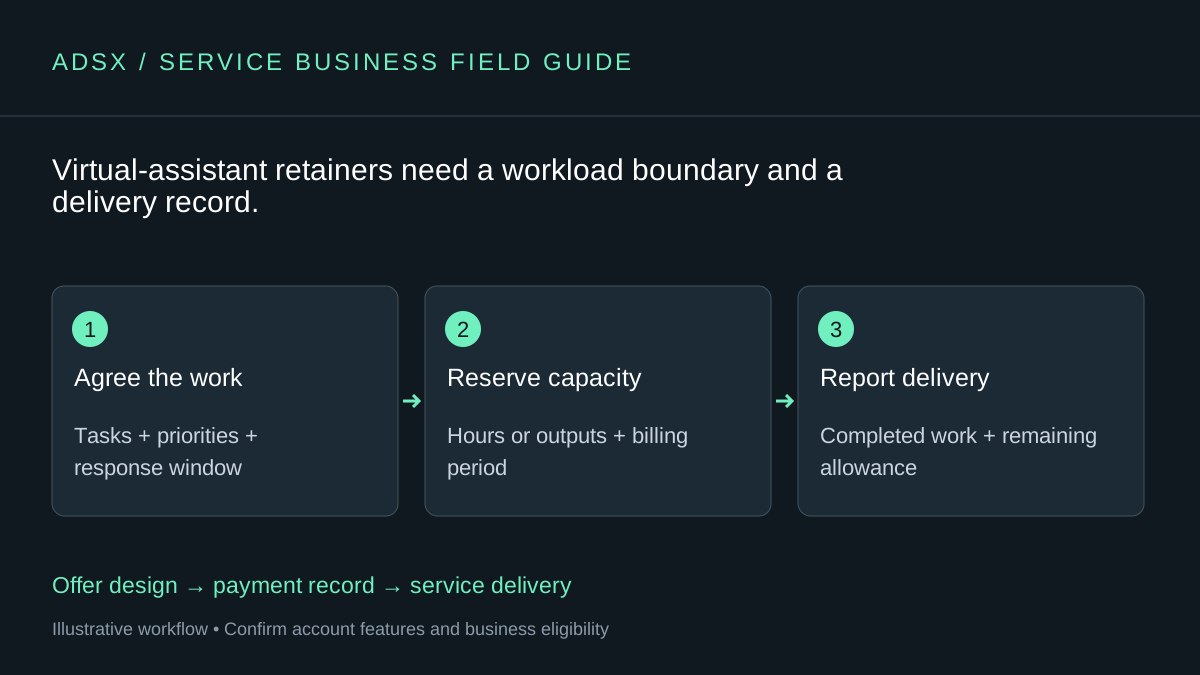
Original AdsX workflow illustration.
Choose hours or outputs as the main promise
An hours-based offer reserves a stated amount of time. An output-based offer promises named deliverables. Both can work, but mixing them carelessly creates conflict: a client may expect unlimited revisions on an output while you believe the hours have run out.
Start with tasks you can estimate and deliver consistently. State the request channel, response window, turnaround assumptions, and what is outside the package. A response within one business day is different from completion within one business day.
| Boundary | Example decision |
|---|---|
| Included tasks | Named administrative services |
| Capacity | Monthly hours or a defined deliverable count |
| Requests | One place to submit and prioritize work |
| Availability | Working days and response expectations |
| Overages | Approval and price before extra work begins |
Make unused time and overages explicit
Suppose a retainer reserves ten hours for an illustrative $400 per month. That is $40 gross per purchased hour before fees and overhead, assuming the full allowance is used. If two hours remain at month end, the agreement should say whether they expire, roll over, or are handled another way.
Whop’s pricing documentation supports recurring offers. Its agency-services guide describes recurring retainers and private workspaces. Neither establishes a native time-tracking or task-allocation system. Keep a reliable work ledger and report the remaining allowance.
Our retainer guide covers the relationship between billing and continuing delivery.
Account for coordination time
A client’s ten task hours may also require briefing calls, access setup, reporting, and review. Decide whether those consume the allowance. If they do not, include them in your own capacity and pricing calculation.
Three ten-hour clients do not automatically mean thirty total working hours. An extra two hours of coordination per client makes the commitment thirty-six hours. Reserve that time before adding more retainers.
Keep access narrow and revocable
Ask for the minimum account permissions necessary for the tasks. Use the client’s approved access-sharing process and document what should be removed when the engagement ends. Do not store passwords in a general chat or move confidential client data into a shared space without agreement.
Whop can hold a clear brief and communication process, but it need not replace the client’s existing task system. Our client-portal guide can help you avoid making the client maintain duplicate task lists.
Pilot one retainer with a weekly work summary. Look for repeated requests outside scope and adjust the offer before selling more capacity. Confirm your actual services are eligible; do not assume every task a client requests belongs in the original agreement.
If Whop simplifies the payment and access handoff, create your business through AdsX’s referral link. Launch with one clearly bounded package and an honest account of the time it requires.