A video project can be profitable on paper and unmanageable in practice if “one video” expands into several formats, new footage, and endless revisions. Whop can be evaluated for payments and client access, but the strongest first step is a deliverables list that survives the first review call.
Disclosure: AdsX owner Dennis Hegstad works at Whop. AdsX may earn a commission from qualifying businesses referred through our signup links. Public sources were reviewed October 4, 2026. Package prices and scenarios below are illustrative, not platform quotes or customer results. Editorial policy.
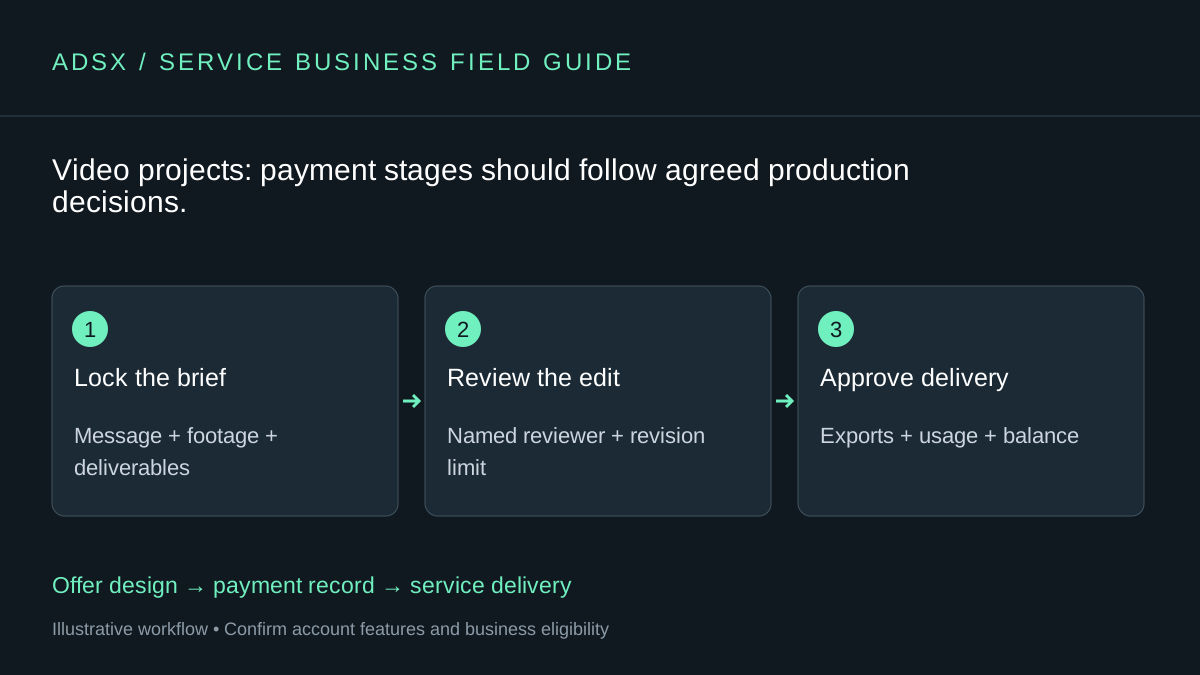
Original AdsX workflow illustration.
Define every final output
Separate the main edit from cutdowns, aspect-ratio variants, caption files, thumbnails, and raw footage. If a client wants a sixty-second website video plus three vertical social clips, write four deliverables into the scope rather than hiding them under one line item.
Record who supplies the script, brand assets, footage, and music permissions. A deadline dependent on client materials should begin only after the agreed inputs arrive.
| Stage | Decision that keeps the project moving |
|---|---|
| Brief approval | Message, audience, outputs, and inputs agreed |
| Production | Filming or supplied footage ready for editing |
| First review | One named reviewer provides consolidated feedback |
| Revision round | Changes stay within the approved brief |
| Final delivery | File formats and acceptance process confirmed |
Use milestones that can be recognized
An illustrative $1,500 project might request $500 at the accepted brief, $500 at an agreed production milestone, and $500 at final delivery. Whether that structure is appropriate depends on the contract. The customer should be able to identify the event associated with each request.
Whop’s checkout documentation covers custom one-time links and automatic installments. A fixed installment schedule is not a substitute for milestone approval. Our installments guide explains how to avoid making the wrong billing promise.
If you use invoices, review Whop’s invoice documentation, including its current 5% customer service fee. Make sure the previewed buyer total matches what you have communicated.
Price the review process, not just the edit
One revision round should have a defined submission process and scope. Ask for consolidated feedback from a named decision-maker. Otherwise, a producer can receive separate conflicting notes from marketing, sales, and the founder and spend hours reconciling them.
A new concept or newly filmed scene is different from correcting the existing edit. Agree additional work before performing it. Keep that approval connected to the revised price and schedule.
At $1,500 for twenty total project hours, gross revenue is $75 per hour before production costs, software, fees, and other expenses. Ten unplanned revision hours reduce it to $50. This arithmetic illustrates why scope control affects the business more than adding another checkout option.
Keep the right review tools
Whop’s agency-services guide describes client workspaces, but it does not establish frame-accurate video review, large-file transfer limits, or editing collaboration features. Retain a specialist review tool when it is useful and link the process clearly from the client space.
Start with a repeatable video package and one review workflow. Our client-portal guide helps organize that handoff. If the payment layer fits, create a Whop business through our referral link and pilot one project.