A house-cleaning business can evaluate Whop for taking payment on a defined cleaning package or an ongoing service agreement. Start by separating the first clean from maintenance visits. The first visit may reveal a workload that a recurring price cannot sensibly cover.
Disclosure: AdsX owner Dennis Hegstad works at Whop. AdsX may earn a commission from qualifying businesses referred through our signup links. Public sources were reviewed October 4, 2026. Package prices and scenarios below are illustrative, not platform quotes or customer results. Editorial policy.
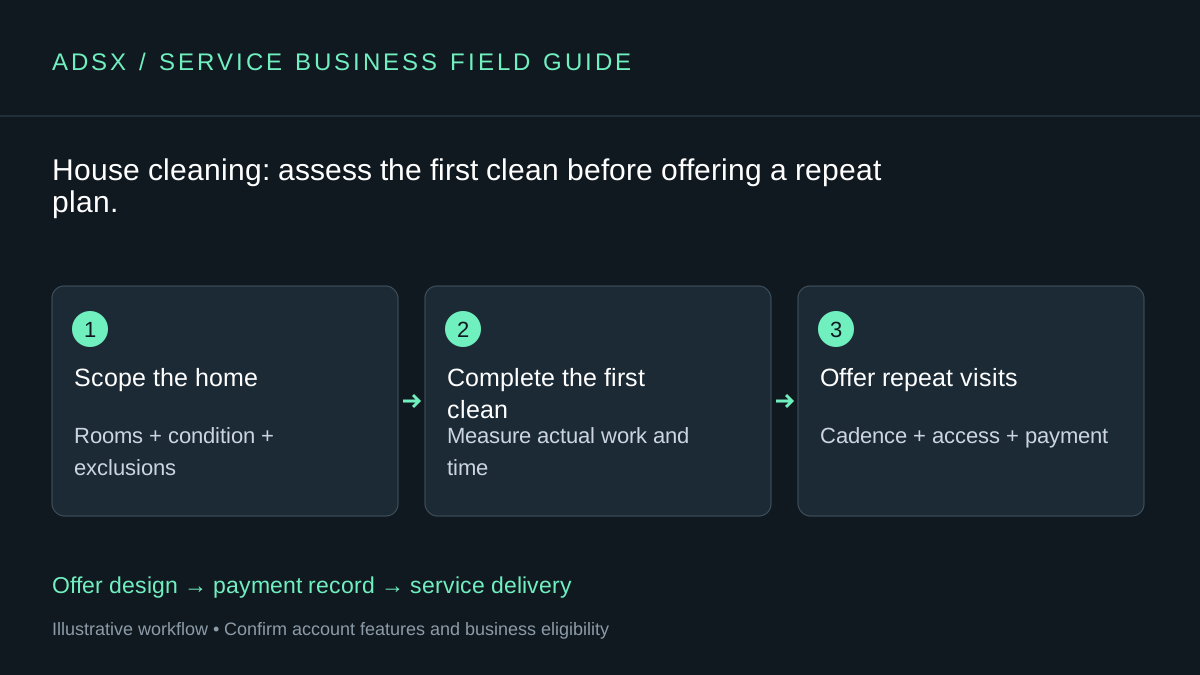
Original AdsX workflow illustration.
Quote the home you will actually clean
Room count is only one input. Condition, access, stairs, pets, requested tasks, and the time since the previous clean can change the job. Write down exclusions such as inside appliances, exterior windows, laundry, or heavy lifting rather than leaving the customer to assume they are included.
A useful first-clean offer explains how you confirm the price if the actual condition differs from the description. Give the customer a choice before doing extra work. Surprise scope changes are easier to prevent than reconcile after checkout.
| Stage | Information to confirm |
|---|---|
| Initial enquiry | Home size, service area, and requested tasks |
| First-clean quote | Included rooms, exclusions, and condition assumptions |
| Access arrangement | Who admits the cleaner and what happens if access fails |
| Repeat offer | Frequency, included tasks, price, and change policy |
Do not confuse every two weeks with twice a month
A visit every fourteen days produces about twenty-six visits per year; two visits per month produces twenty-four. At an illustrative $140 per visit, that is $3,640 versus $3,360 in annual service value. Those are different offers even if a customer casually calls both “biweekly cleaning.”
Whop’s pricing documentation describes recurring billing intervals. Make the amount and interval in checkout match the service agreement. A monthly payment can fund another visit cadence, but you must explain how missed, moved, or extra-calendar visits are handled.
For a first clean, a one-time checkout link can collect the agreed amount. For regular work, decide whether you are charging per visit or selling a recurring service package. Our subscriptions guide covers the distinction.
Keep keys and access codes out of the sales page
Payment is only one part of a home-service relationship. Store access instructions securely and limit them to the people who need them. A public Whop community is not a place for a customer’s address, alarm code, or absence schedule.
Retain your scheduling and route system if it works. A paid subscription does not assign a cleaner, confirm entry, or mark a visit complete. Maintain a private ledger linking the household, planned visit, completed work, and payment record.
Test margin using real elapsed time
If a $140 visit takes three labor hours plus one hour of travel and admin, the gross revenue per total hour is $35 before supplies, platform fees, wages, taxes, and other costs. Use that figure to compare route density and scope, not as a profit claim.
Pilot a small set of homes with similar needs. Review whether recurring customers understand the included tasks and whether the visit calendar stays manageable. Whop is a candidate if payment collection is the problem; it need not replace a cleaning operations platform.
Read the service-business setup guide and create a Whop business through our referral link when you have one cleaning offer whose scope and schedule are ready.