Whop Ads and Meta Ads Manager can both be relevant to a business advertising on Meta. The useful comparison is how each fits your account ownership, billing, measurement, and team workflow. There is no evidence here that changing the campaign interface alone improves returns.
Disclosure: AdsX owner Dennis Hegstad is employed at Whop. AdsX may earn a commission from qualifying businesses referred through our signup links. This guide is based on public documentation reviewed October 4, 2026, not an AdsX advertising test. Worked examples are illustrative. Editorial policy.
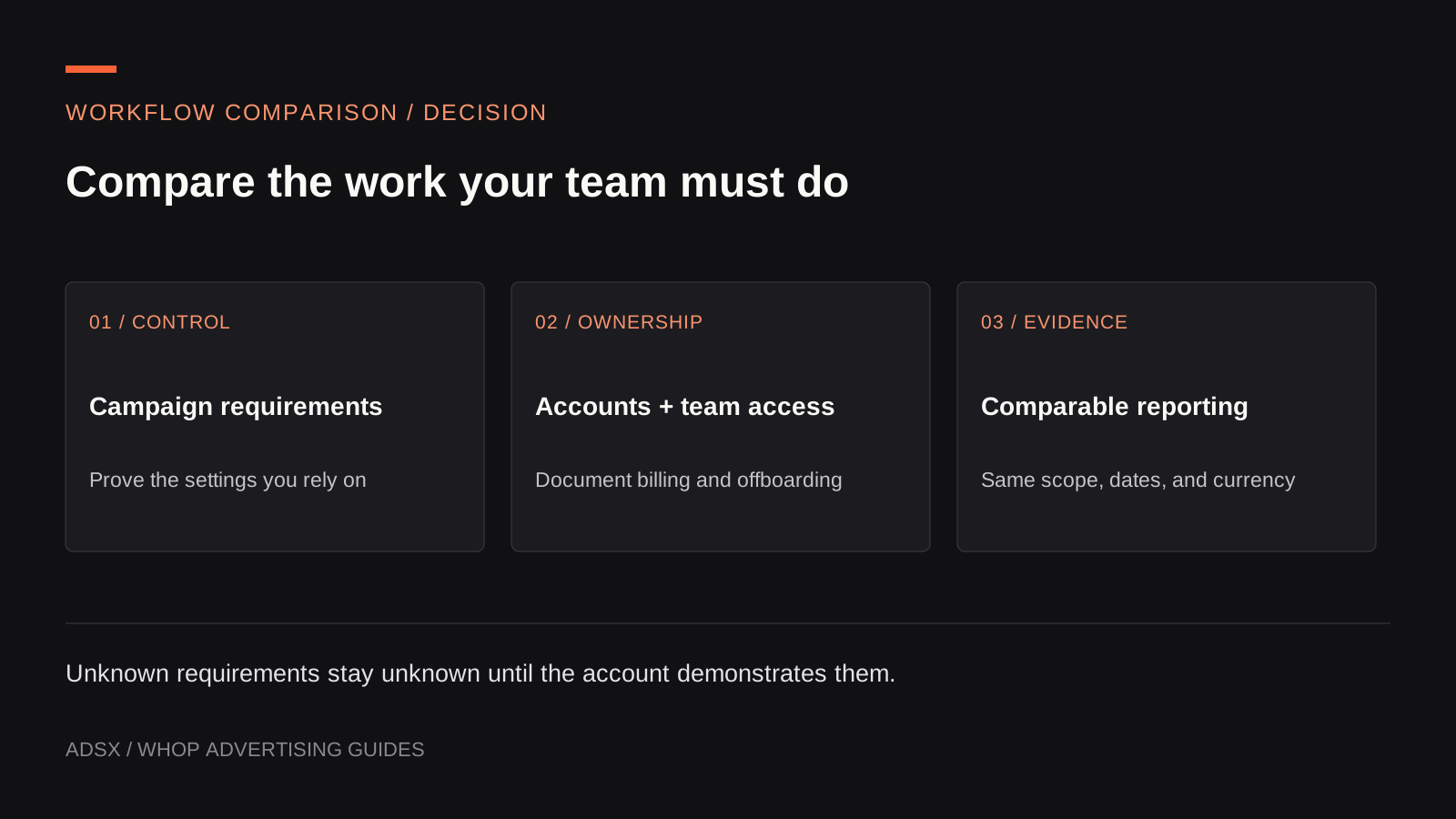
Original AdsX illustration.
Compare the operating arrangement
Meta’s Ads Manager training covers campaign creation and reporting in Meta’s own tools. Whop’s advertising developer guide describes campaigns using Whop’s ad account and billing relationship.
That distinction matters more than a feature checklist assembled from screenshots. A team needs to know who controls the account, where reports live, how access is granted, and what happens if it changes providers.
| Question | Whop Ads evaluation | Direct Meta Ads Manager evaluation |
|---|---|---|
| Where will the operator work? | Inspect the Whop campaign interface and available controls | Inspect the team’s Meta campaign and reporting setup |
| Who owns the advertising account? | Understand the Whop-provided arrangement | Confirm the business’s ownership or authorized access to the chosen Meta account |
| How is spend reconciled? | Review Whop account billing and campaign records | Review billing for the selected Meta ad account |
| What measurement will guide decisions? | Verify Whop event definitions and destination integration | Document the definitions and attribution settings in the Meta reports you use |
| How can the team leave or change providers? | Confirm export, asset, and access arrangements before relying on them | Confirm business ownership and agency offboarding procedures |
These are due-diligence questions, not claims that every option exists in every account.
When Whop is worth evaluating
A business already using Whop for its offer and operations may prefer an advertising workflow near those records. Whop’s Meta launch announcement positions the product around that connection.
Imagine a two-person course business. One person maintains lessons and support; the other handles acquisition. They want a single campaign brief, a manageable reporting routine, and a clear approval process. Whop is worth evaluating if its available controls support that routine without adding manual reconciliation.
An existing Shopify merchant can evaluate a different arrangement: keep the store and use Whop for advertising. Read the Shopify integration decision guide before treating a change in campaign tooling as a store migration.
When staying with Meta may be simpler
A team with established Meta reporting, clear account ownership, and a dependable operating process should identify a concrete improvement before changing it. The improvement might be less reconciliation work, a better fit with Whop operations, or a specific capability it has verified.
Create a short list of requirements from the last month’s work. If you regularly use a particular breakdown, campaign setting, naming convention, or approval routine, reproduce that task in the candidate workflow. A product demonstration cannot answer every operational question for you.
For an agency, include offboarding. Ask where client assets live, what access the client retains, and how the next operator will receive historical context. Those questions are useful for either arrangement.
Compare measurement before performance
Meta’s objective course connects the campaign goal to how success is measured. Use the same discipline when comparing tools: define the sale, date range, currency, and customer population first.
Do not compare one dashboard’s attributed revenue with another system’s total revenue and call the larger figure a winner. A store can sell the same number of products while two reporting systems assign credit differently. Our Whop ROAS guide gives a practical reconciliation example.
Also avoid launching duplicate campaigns to the same audience without an experiment design. If they overlap, the resulting difference is difficult to attribute to the interface. For many small teams, checking operational fit first is more useful than attempting a hurried performance comparison.
Use a weighted decision record
Score requirements only after observing them. An illustrative merchant might assign 35% to measurement reliability, 25% to required controls, 20% to account and team access, and 20% to operating effort. These weights are a discussion aid, not a universal ranking.
Mark an unverified requirement as unknown instead of assigning an optimistic score. If purchase measurement or required account access is unresolved, that can outweigh several convenient features.
Our Whop Ads overview covers channel availability and public pricing claims separately. This comparison does not promise lower CPMs, guaranteed approval, or protection from network restrictions.
Choose around a real task
Create a Whop business through AdsX’s referral link if you want to evaluate the workflow. Bring one existing campaign brief and the reports your business already uses. The right choice is the arrangement your team can operate, measure, and sustain with the fewest unresolved requirements.