Examples and worksheets are original editorial planning aids, not observed merchant results. Sources checked November 28, 2026.
Original AdsX explanatory illustration.
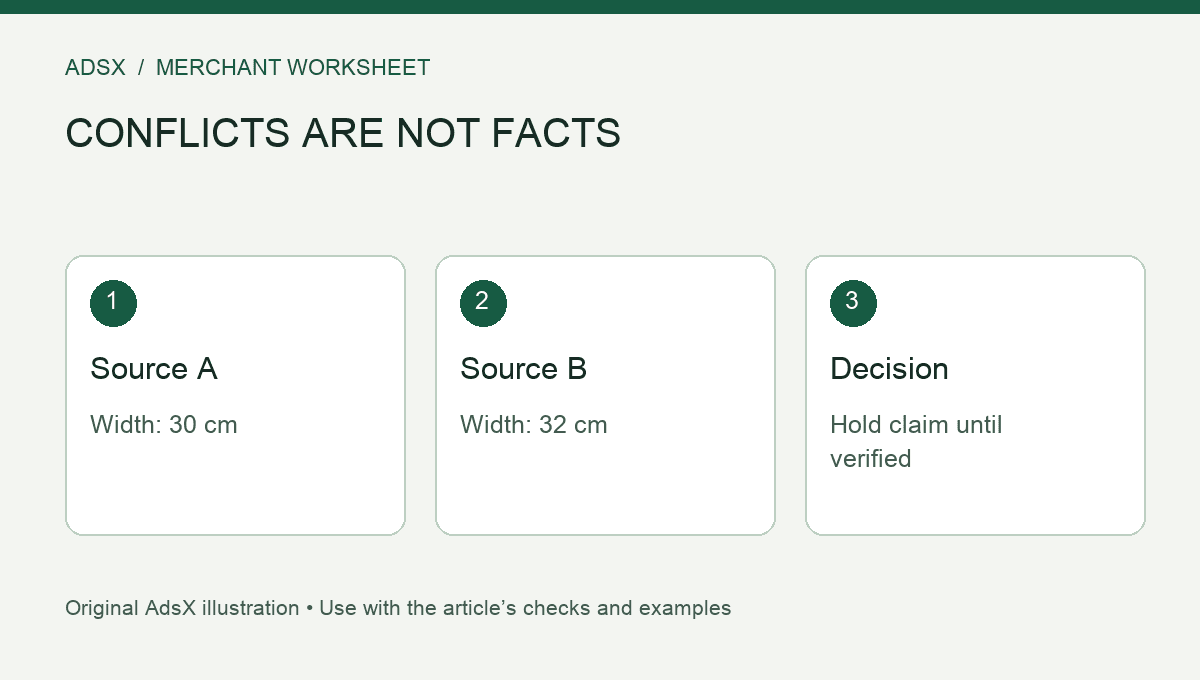
When a supplier spreadsheet says a bag is 30 cm wide and its product sheet says 32 cm, do not ask AI to choose the more likely value. Ask it to expose the conflict and prepare a verification question. A fluent product description can hide an unresolved fact just as easily as awkward supplier copy can.
This workflow is for reconciling source material before writing. It is different from polishing an existing description or generating a product FAQ.
Create an evidence table
Use one row per claim and keep the source reference attached. A hypothetical travel pouch might have these unresolved fields:
| Claim | Source A | Source B | Required action |
|---|---|---|---|
| Width | 30 cm | 32 cm | Measure the current sample and ask which version ships |
| Material | Cotton | Cotton blend | Obtain the actual composition |
| Included items | Pouch only | Strap pictured | Confirm the sold package contents |
A photograph can show an accessory without establishing that it is included. A measured sample can establish that sample's dimensions without proving every future production batch will match. Record scope as well as the value.
Use a comparison prompt, not a guessing prompt
The following prompt is untested and can be used in an assistant with non-sensitive excerpts you are authorized to share:
Compare these supplier excerpts for one product version.
Return a table of claim, source references, agreement or conflict,
and the specific question needed to resolve each conflict.
Do not choose a winner, average dimensions, invent certifications,
or convert missing information into a benefit. Keep units explicit.
[Paste the approved excerpts with source labels.]
Check the output against the original documents. A model can miss a qualifier such as “including handle” or merge two versions. Do not upload confidential supplier agreements or private customer information to obtain this review.
Resolve the claim before drafting
Choose a verification owner and record the supplier response or sample measurement. If a material claim remains unknown, leave it unpublished until you can substantiate it. Do not replace an unsupported precise claim with an equally unsupported vague one such as “premium natural fabric.”
Shopify's AI product-description guidance warns that generated descriptions can introduce facts or benefits and makes the merchant responsible for published accuracy. The assistant's confidence is not a source.
Put each verified fact in the right place
Shopify’s product information guidance for AI platforms emphasizes clear, accurate product information. Distinguish customer-facing descriptions from operational fields. Keep a reusable fact sheet so the description, image captions, specifications, and customer-support answers agree.
Our product specifications block guide can help present approved specifications. It should consume verified values, not become another place where a generated claim is invented.
For a new store, complete this review before the catalog step in Start a Shopify Store. Save unresolved questions with the product draft and repeat the check when the supplier changes the version. Better prose is useful only after you know what you are selling.