Whop checkout questions can collect information before someone joins or buys. The useful design question is which answers you actually need at that point. Ask for information that changes whether or how you can deliver the offer; move lengthy project discovery to a separate, appropriate step.
Disclosure: Dennis Hegstad works at Whop. AdsX may earn compensation from qualifying referrals through our Whop partner link. This guide reviews public documentation as of October 14, 2026. We have not tested form submissions, payment outcomes, or answer exports in a merchant account.
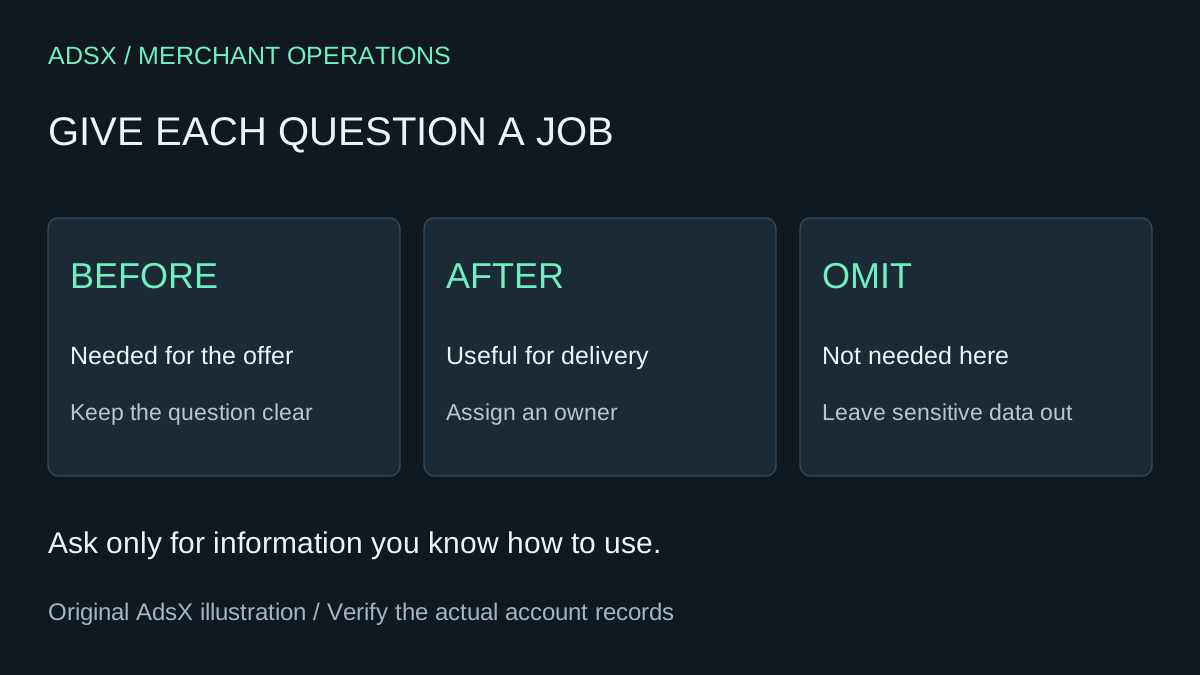
Original AdsX service-intake illustration.
What Whop documents
Whop's checkout-link guide lists Ask questions before checkout under advanced options for free, one-time, and recurring links. It describes an Optional checkbox for questions that buyers can skip. The guide also documents editing an existing checkout link from the dashboard.
That establishes a way to ask questions. It does not establish every field type, validation rule, export format, integration event, or conditional branch you might want. Verify those details in the actual configuration before promising that an intake answer will automatically reach another system.
If you are still building the offer itself, begin with the checkout-link walkthrough. The exercise below is about choosing and using questions, rather than repeating the general payment setup.
Example: a fixed-scope website review
Imagine selling a review of one public business website. The deliverable is a short recorded walkthrough and a prioritized list of five changes. The service excludes implementation, private customer data, and access to the buyer's admin account.
The following question set is an original example, not a Whop template or a tested checkout:
| Candidate question | Suggested timing | Reason |
|---|---|---|
| Which public website should we review? | Before purchase, if needed to confirm scope | Identifies the work |
| What should a visitor do on that site? | Before purchase or optional context | Gives the reviewer a concrete goal |
| Which page concerns you most? | Optional | Helps prioritize without blocking delivery |
| What are your admin credentials? | Do not ask | The defined service does not need them |
| Describe your entire business history | Leave out | Adds effort without defining this deliverable |
| Which implementation project comes next? | After delivery, if relevant | Belongs to a different decision |
For the website field, provide a short example such as https://example.com. For the goal, a plain sentence like “book a consultation” is easier to act on than a broad request to explain the company's strategy.
If the website does not exist yet, this particular service may be a poor fit. Explain the requirement on the offer page, not only inside the checkout question. An intake form should support a clear promise rather than reveal hidden restrictions at the last moment.
Use required questions sparingly
A question deserves to block progress only when a missing answer prevents a necessary decision. If the answer merely makes the work more convenient, consider making it optional or collecting it later.
For the example review, the website address is central. A preferred recording style is not. A buyer who skips that preference should still receive the service described on the sales page.
Write down what happens when an optional answer is blank. “Review the homepage and the primary conversion page” is a usable default. “The operator will figure something out” is not a delivery process.
Do not treat an answer as proof of identity, ownership, eligibility, or consent for unrelated uses. It is information supplied by the buyer, and it may require clarification. Keep sensitive information out when the service does not need it.
Connect the answers to delivery
Whop's product documentation explains how products define the apps or experiences members receive. Intake answers are a different part of the offer: they tell the operator what to work on. Define both the customer's access and the staff handoff.
For a solo reviewer, a simple handoff record could contain the order reference, public website, requested goal, missing information, and delivery deadline. Before relying on this workflow, confirm where answers appear to an authorized operator and whether they remain associated with the correct buyer and purchase.
Do not promise an automated CRM update merely because a question appears in checkout. A manual process can be suitable for a small volume, provided responsibility and response time are clear. Automation should follow a verified data path.
Review the experience before distributing the link
Use a short acceptance checklist in the supported environment available to you:
- The offer description explains the scope before checkout.
- The questions use language a buyer can answer without help.
- Optional questions can be skipped as intended.
- A long answer remains readable on a phone.
- The operator can find the answers needed for delivery.
- The next step is clear when an answer is incomplete or unsuitable.
These are proposed checks, not claims that we completed purchases or submissions. If a question depends on an undocumented capability, resolve it with current Whop documentation or support before making it part of the promise.
For service operators considering the platform, start with Whop and compare the actual checkout controls with your delivery needs. A short, useful intake is better than a long form nobody knows how to use.
Continue with the member onboarding guide to plan what happens after purchase.